
Who Decides?
All of us have our own ways of explaining our experiences, defining our identities and articulating both . These self definitions are an important part of identity, including the way it forms and evolves as well as how you learn about and come to understand who you are.
Most of the time, this works. Unless or until some of the systems we have to operate inside of or exist in, come along. These systems, and/or the opinions of others can impose definitions on us of who we are. Definitions that often don’t match our own, or which only capture part of who we are.
But the thing is; the most important definition of you is your own. Which is why it can be important to question the definitions that might be imposed on you and maybe ask; who decides?
All of us have our own ways of explaining our experiences, defining our identities and articulating both . These self definitions are an important part of identity, including the way it forms and evolves as well as how you learn about and come to understand who you are. As Dolly Parton once said; find out who you are, then do it on purpose. Because you are allowed to be you. When you know who you are, you’re better able to do what’s right for you and to do the things you want to do.
Most of the time, this works. Unless or until some of the systems we have to operate inside of or exist in, come along. Systems that require us to present our worst case scenarios or to focus on our weaknesses or deficits rather than our strengths or capacities. These systems, and/or the opinions of others can impose definitions on us of who we are. Definitions that often don’t match our own, or which only capture part of who we are. In systems, often the part of us that shows in deep struggle.
When definitions are imposed on us, especially when those definitions are often present or pushed, even out of necessity, it can make it harder for us to know for ourselves or be confident with our own understanding of who we are. And if it’s a struggle to know who you are, or to stand strong in that knowing, doing it on purpose can become even harder…
The thing is; the most important definition of you is your own. Which is why it can be important to question the definitions that might be imposed on you. When a definition is different from your own, you can ask;
how is it different from your own definition?
Is this definition all of me?
Who decided this?
Is the definition necessary? For example, is it focusing on your worst day in order to access supports
To that last point- I’m not saying having to focus on your worst day, your weaknesses, is ok. Not by any means. It just means that sometimes, operating in that frame, with that narrowed definition of yourself, may be necessary in order to operate in the systems you need to in order to enable your access to supports.
Something to remember about those systems is that they, like many things, are a social construction that enough people decided on to make it powerful enough to be something we sometimes need to exist inside of, even when it doesn’t fit us. The question is not necessary whether the definition fits, it’s who created the definition in the first place and how that definition was decided on.
This is also where, in the disability community particularly, there is the social model of disability, which operates in accordance with the belief that someone is disabled by their surroundings. However, I believe the social model can be true for many other forms of marginalisation for any individual whom faces environmental and/or societal barriers to being themselves. Sometimes, we are disabled by the systems we have to operate in, and it’s pointing out the effects of that disablement that can lead to getting the support we need.
But, just because another definition exists does not mean that you have to accept it. It doesn’t mean it’s truth. It doesn’t mean it has to become part of your own definition. Both can exist. The opinions of others. The narrowed definitions that are sometimes necessary to temporarily adopt for a purpose. Maybe, this is where Dolly’s words come back into it. Find out who you are- that could mean rediscovering, reconnecting, redefining, all of those or something a little different. Then, you can be yourself. On purpose. And you can decide, when and if any of those other definitions might need to be the main one- temporarily, for a purpose, like to operate in a system that requires that particular definition in order for your needs to be met.
Further Resources
Social Constructionism explainer (video)
Defining Disability (previous public Illuminating Insights blog)
Learning Your Limits
When you think of limits, you might think of things like rules or barriers. But, limits can also be what helps us understand and protect what feels respectful and what makes us feel comfortable versus what might drain us or cross a line.
An interaction might leave us drained, we might feel tense around someone, or have an instinct telling us to be cautious, even if the ‘why’ is unclear. While unpleasant, this discomfort can give us valuable information about what might not be ok for us.
When we reflect on it (with professional support if needed) is when we can start to pull out the lessons that might be hidden beneath to identify what our limits might be. Your limits do not have to be fixed or set in stone.
When you think of limits, you might think of things like rules or barriers. But, limits can also be what helps us understand and protect what feels respectful and what makes us feel comfortable versus what might drain us or cross a line.
In this way, our reactions can be information hinting at what our limits might be. An interaction might leave us drained, we might feel tense around someone, or have an instinct telling us to be cautious, even if the ‘why’ is unclear. While unpleasant, this discomfort can give us valuable information about what might not be ok for us.
When we reflect on it (with professional support if needed) is when we can start to pull out the lessons that might be hidden beneath to identify what our limits might be by getting a little curious and asking questions about it.
Why doesn’t this feel ok? What about it doesn’t feel ok?
What do I need to be different to make it feel ok? Why?
What might feel more ok?
The answers to these questions may also change, depending on a lot of things like where you’re at in life and in different contexts, including the environment around you, particular situations you might find yourself in or who you’re with at the time. And, your answers now will likely be different to what your answers might have been previously, or what they might be in future. That’s allowed. Your limits do not have to be fixed or set in stone.
When your limits become clear for you and you also make them clear for others, not only is it about protection, it can also help strengthen safety. Limits help build understanding, which, in turn, can foster respect. For you, for your needs, and the same in return if the other person is also clear with you. Sometimes, this clarity can breed further clarity- when your limits are known, how does the other person respond? Do they ignore or try to push the limits you’ve outlined? Or do they respect them, maybe even try to understand better if it doesn’t feel completely clear just yet?
It will probably take time for your limits to start feeling clear, especially if it’s not something you’ve thought about a lot before, but that’s ok. Good things take time, and in the long run, learning your limits can be a very good thing.
Further Resources:
Brené Brown’s Braving Inventory
Some People Like Turtles…
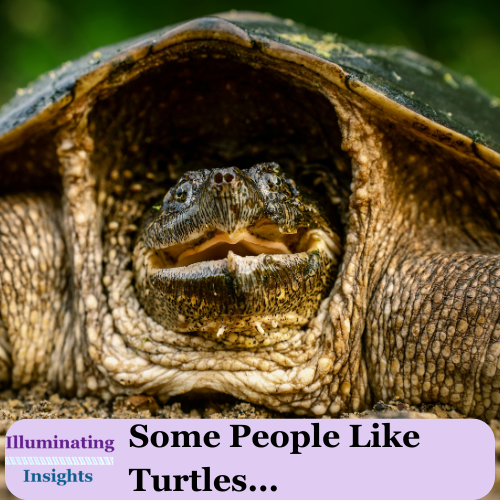
Once, when I was educating young school children about being the same versus being different, one student summed it up like this; ‘Some people like turtles, others don’t and that’s ok’. Like many things children say, it’s simple, but also a little profound. Not everybody likes turtles. We don’t think everyone necessarily needs to.
Yet sometimes, when it comes to ourselves, our standards can be higher. We want everybody to like us. Universal acceptance is what we’re striving for. This could mean we try and people please, mask, fit in or try to change ourselves in a bid to gain that acceptance from everyone. But when we do that, we’re trying to be someone we’re not.
Allowing ourselves to be who we are is one of the bravest things we can do. The right people will accept you as you are. And, the really special ones may not just accept it and say ‘you can stay’, but go a step further. They might smile at the things you’ve been led to believe may be ‘wrong’. Or, they might find the quirks others made you feel lesser about genuinely endearing. There’s a beautiful little moment in Heartbreak High where one character asks their close friend about a trait they’re self conscious about. The friend’s response is not just acceptance, but an affirmation of belonging. Like that friend, your people won’t see those qualities as things to fix. They might appreciate them or see the beauty in them instead.
Maybe that’s part of the learning that student took away. We don’t have to be liked by every single person. Liking turtles is ok. So is being different. The real goal isn’t necessarily earning everyone’s approval, but finding the people who don’t just make room for who we are, but who truly appreciate you. Because those people are the ones who can help us see that just maybe, the qualities some call ‘quirks‘ are actually treasures worthy of celebration.
Further Resources:
Example of acceptance & belonging in Heartbreak High
Reconnecting With Your Own Voice
As humans, we all have a sense of what we need and of what we feel, known sometimes as ‘interoception’.
A common experience associated with being marginalised can be being dismissed or sometimes having the validity or legitimacy of our needs questioned. When that happens, and especially when it happens repeatedly, we can start to question our own knowing, and eventually, even stop trusting it.
It can start with moments where you might be made to feel like ‘too much‘- like you’re too sensitive or too needy. As if your needs are unreasonable (one reason I don’t always like terminology like ‘reasonable and necessary’). It can look like automatic apologies, just for having needs. It can look like overriding our limits and trying to push through instead.
That ‘too much‘ feeling can start to really sink in when our needs are questioned over and over. Or when we have to justify our needs, such as to access the systems of support we need to live. Eventually, if you get that kind of feedback enough.. the kind that reinforces you’re ‘too much’ or your needs are ‘too much’, or even ‘you’re a problem to be accommodated’, you’ll start to believe it as truth, even when you know it’s not, because those voices become louder.
When the voices telling you things like ‘'too much’ become louder, it can also become harder to hear your own voice, to recognise your own needs or identify what you’re feeling (sometimes known as alexithymia). And this is when we can start to lose trust in our own knowing.
But, here’s a truth. Your voice carries invaluable knowledge. Wisdom you’ve gained through the things you’ve lived through. The expertise you gain through your own experiences is just as valid as any other form of experience. Our experiential expertise can include important wisdom like knowing your limits, understanding your reactions and responses and learning what is and isn’t helpful for you. This kind of self awareness and knowing yourself is the kind that develops as you live and experience.
When there’ve been a lot of other voices, some of which may be louder than your own, it’s understandable your own voice may have become harder to recognise. That’s ok. The good news is that you can relearn to recognise and trust yourself and your voice. This might look like allowing yourself to pay attention to discomfort and take it seriously, giving yourself permission to listen to yourself or treating your experiences as being worthy of consideration.
None of this relearning has to be huge. It can start with quietly and simply letting our experiences matter.
Further Resources:
interoception (discussed in relation to autism)
Why Your Voice is Valuable (previous Luminaries exclusive blog)
The Costs of Curiosity
Curiosity in allyship is a strength, but it can also come with a cost. It’s important to pay attention to the potential costs of that curiosity, such as who it asks something of, and what that ask is.
I’ve been reflecting a little recently on the impacts it can have when an ally takes initiative with their curiosity versus if they don’t take initiative. I’ve experienced various levels of this.
Take for example, a situation involving use of an ableist slur. When I spoke with an ally who’d witnessed the incident, it became apparent the ableist slur was not one they were familiar with (yet). But instead of letting me explain it, this ally stopped me in my tracks and told me they’d instead do the research to educate themselves. This was the first time in my life anyone had ever said anything like that to me and it blew my mind. I realised how much emotional labour there is in the explaining and educating, especially in a situation I’m emotionally invested in or which has personally affected me. Because suddenly, for the first time, that load had been intentionally taken off me.
I had another experience where I was asked to outline the specific effects and ongoing distressing impacts of previous experiences in order to help others understand what it’s like. This required me to revisit painful experiences and potentially detail them for others, in this case in an environment with limited understanding of the impact this can have. While the intention of this request was good and partially to improve understanding, placing the onus on an impacted individual to educate and explain can create extra emotional labour, such as retraumatisation and recovery from revisiting painful memories and an extra emotional and cognitive load of navigating these kinds of conversations in emotionally affecting situations.
While both of these situations were driven by curiosity, they feel completely different in terms of how space was created. In the first example where an ally took initiative, space was created for me. I was specifically stopped when I automatically started to go into explanations. In the second example, I was being asked to create the space myself.
That’s not to say this request was wrong- there is a place for personal sharing. But there is a difference when, wherever possible, initiative is taken to learn as much as you can first, or when there is understanding of what the request asks of the person. Because both that initiative, or the awareness, take a bit of the pressure off the individual and the load on them is lesser then it might otherwise be or supported.
Sometimes, taking initiative to investigate yourself first can even make any questions you do ask later on richer because of the extra information, understanding or insight you’ve gained first.
Wanting to understand is important and so is how you go about building that understanding. Curiosity can look like asking a question, and it can also be taking time to investigate on your own first.
Further Resources:
Allies Take Note example of initiative taking (Social Media post)
Looking for Safe-Enough Connection
We’re often told that connection is essential for health and wellbeing. And they’re not wrong. But what they’re talking about is true connection. And for those of us who are marginalised, finding it is not necessarily as simple as it’s made out to be. For many of us, there can be a complicated history with connection, where connection hasn’t always felt safe, or even possible. That history doesn’t just vanish. It shapes how we approach connection, and what we need from it.
Connection is shaped by context and history. The experiences we’ve had, the environments we’ve existed in and the way others have responded to us all shape what connection might look like in future. This can show up as things like conditional connection- ‘I’ll interact with you if….’ , toleration over full acceptance or pressure to adapt, pretend or fit in. When you have experiences like that, it can have unintended lessons like ‘I have to be this kind of person‘, ‘I won’t be accepted, so there’s no point trying‘ or ‘I can’t be myself’.
The kinds of connections that teach us these lessons can leave us feeling cautious, uncertain and with an instinct to protect ourselves. We might find ourselves scanning for potential threats, being selective with what we share or keeping ourselves guarded. We might be scared of past experiences repeating, exhausted from trying to navigate failed or conditional connection or expecting to be misunderstood.
For example, with many of my close friends, I give them what I call ‘a year to run‘ before I let them in fully. And even then, I worry about them disappearing or deciding suddenly I’m too much for a while after, because it’s happened many times before. That year is when I’m learning how they stay. This has become one way I’ve found myself approaching connection, allowing space for the ‘what if’, while also giving people the opportunity to show me something different. It will look different for everyone, but many of us find our own ways of protecting ourselves while still trying for connection.
The reality of connection, especially for those of us who are marginalised, is that it’s not necessarily entirely good, nor is it entirely bad; it’s nuanced. Where a connection sits within that can depend on things like the people involved, the context and our capacity at the time. You might feel a need to take things slowly or share selectively. And there may be some connections that only feel safe in some ways, but not all. Connection is often something we’re continually navigating and feeling our way through.
True connection, meanwhile, is the safe kind. Or perhaps the safer/ safe-enough kind. It doesn’t require us to pretend. Instead, it makes space for us to be who we are and meets us with a willingness to understand.
For me, a connection feels true when I feel like I can be myself, when quirks are appreciated, even valued and when others show up. Not just in the good, easy moments, but also in the harder ones, when they choose to stay and stand with me through the struggle.
None of this is to say that fear or anxiety completely disappear. But it is possible for connection to feel steadier, and truer than what we may have come to expect, or even thought possible.
Our connections will each be as unique as we are. They don’t have to look the same, or the way we’ve been told they should. Connection can be something we feel our way through, one step at a time, as we look for what feels safe enough and learn what it’s like when someone stays. There’s no one right way to approach connection. Just your way, in whatever way feels possible, safe and right for you.
Some of Us? We’re Just Different
Being marginalised can make feeling ‘different‘ very familiar. But that doesn’t mean it’s always pleasant. It can be, but a more common experience is having differences be something that sets you apart in a way that’s othering. Being different can sometimes mean having qualities about you twisted into something supposedly ‘bad’ to the point where it can feel like aspects of who you are are ‘wrong‘, or even a crime.
Content Warning- this blog includes discussion of the impacts of marginalisation & othering that may be triggering for some readers. Please proceed with caution.
Being marginalised can make feeling ‘different‘ very familiar. But that doesn’t mean it’s always pleasant. It can be, but a more common experience is having differences be something that sets you apart in a way that’s othering. Being different can sometimes mean having qualities about you twisted into something supposedly ‘bad’ to the point where it can feel like aspects of who you are are ‘wrong‘, or even a crime.
I’ve not seen this more strongly reflected then in the character Elphaba, from Wicked. In her story, Elphaba is someone whose goodness, loyalty and integrity are twisted through rumours and lies spread by others in power. But through it all, she remained fiercely, unapologetically herself. This is what strikes me most about Elphaba, and what draws ne to her character, particularly in the most recent cinematic portrayal by Cynthia Erivo, which has been more powerful and resonant for me personally than any other portrayal of Elphaba I’ve seen before. I strongly suspect this power comes from the authenticity Cynthia is able to bring as a result of their own lived/ living experiences as a marginalised, queer person of colour. This made Elphaba’s strength and courage even more real.
For me, Cynthia’s Elphaba provided an example of being yourself in the face of false, at times deeply damaging portrayals. When things about you are twisted, especially when it’s happened repeatedly, or others begin to believe it as truth, it can be harder to recognise the twisted version for the false lie it is. Maybe in different ways, but I’ve had that experience. So seeing Cynthia’s Elphaba particularly, stay herself, even if she did not go entirely unscathed, reminded me that the lies of others don’t have to define you.
By refusing to become the distorted version she’d been portrayed as (even if she relented with the label), Cynthia’s Elphaba challenges the truth of the misrepresentations about her. When what’s said no longer matches what is for long enough, it can tear at the fabric of those words as truth, exposing them for what they really are.
On the flip side, when you are able to be your truest self, it allows for deeper, more meaningful connections with others. Seeing Cynthia’s Elphaba stand tall and push back to define herself provided me with an example that proved it was possible for me to do the same, and boosted me with a little confidence. I left the movie theatre standing taller, breathing a little easier. It was like Cynthia’s Elphaba had written me a permission slip or whispered in my ear; you’re allowed to take up space. You don’t have to apologise for being yourself. More than that, with all the hype around the films, there were images of her everywhere, so it felt a little like she was walking alongside me too. Even that feeling can help remind you you’re not alone. Knowing you’re not the only one makes things feel steadier. Your different can’t be ‘wrong‘ if there’s someone else who’s different too. Especially if their different looks or feels a little like yours.
Characters can help create this sense of belonging, especially when we haven’t yet found it in our real world. Long before I met anyone else with similar disability effects to me, I clung on to Edward Scissorhands- the closest I could find, but not really like me much at all. I’ve found a community of others with similar experiences since then, but Edward will always have a special place in my heart, especially for the companionship he and his story provided while I waited. Edward gave me a kind of reassurance that being different can be a good thing. That there will be people who see me, not just what sets me apart. He gave me resonance in times I felt like the only one in the world like me, which made me feel a lot less out of place.
Similarly, Cynthia’s Elphaba will always feel like a kindred. She’s someone who’s known pain similar to mine, but who showed me a different way- staying strong, holding your ground, not apologising for who you are. She’s the one I look to when my instincts urge me to shrink. My reminder that I don’t have to.
Belonging can begin with a special character who feels like a friend the moment you see them. Someone who seems to reflect you back to yourself, offers proof of possibility, or simply reminds you that you’re not alone in your experience. Because some of us? We’re just different.
Who or what has reminded you you’re not alone or that you’re allowed to take up space?
Further Resources:
Cinema Therapy on Elphaba (video)
Safety & Trust
Trust is an important component of safety. Where safety is an expectation to be free from harm, trust is an expectation of reliability and integrity from others. In many ways, trust needs to be present in order for safety to be truly felt. Because trust, backed up by action, enables the stability that safety needs to exist.
Trust is an important component of safety. Where safety is an expectation to be free from harm, trust is an expectation of reliability and integrity from others. In many ways, trust needs to be present in order for safety to be truly felt. Because trust, backed up by action, enables the stability that safety needs to exist.
Trust, like safety, isn’t necessarily just there- it’s something that is built over time through a history of examples. In this way, it goes along with the old adage that actions can speak louder than words. Someone’s actions can show you their trustworthiness. And someone’s actions can also show you why they may not be so worthy of trust.
Trust is a choice you get to make, including a lot of smaller choices like;
who you trust
what and how much you trust them with
when you trust them with something
You do not owe anyone trust, or instant trust. If you’re unsure, that’s a signal in itself worth paying attention to and investigating further. It’s also ok to wait to trust, or test the levels by choosing to trust someone with smaller things before larger or more meaningful ones, to see how they respond.
Further Resources:
Brené Brown & Charles Feltman on Trust (podcast)
Illuminating Insights’ From Darkness to Daylight Safety workshop (next date March 2026)
Curiosity As An Enabler
Hearing ‘no‘, ‘can’t‘ or ‘it’s not possible‘ can be common for people living marginalised. But ‘can’t‘ isn’t necessarily right and ‘not possible‘ isn’t always the case. Instead of taking things like ‘no‘, ‘can’t‘ or ‘impossible‘ as absolutes, consider; what might change if you became curious instead?
Hearing ‘no‘, ‘can’t‘ or ‘it’s not possible‘ can be common for people living marginalised. But ‘can’t‘ isn’t necessarily right and ‘not possible‘ isn’t always the case. Sometimes, it comes from people unwilling to move beyond assumptions or ask questions. Why they do that is their problem, but it doesn’t mean you can’t challenge it. Because as I explored in a recent LinkedIn article, sometimes, the supposedly ‘impossible‘ can be made possible, ‘can’t‘ can become can and ‘no‘ can be turned into yes. One of the key components of making the impossible possible is curiosity.
I was once told I wouldn’t ever drive. But now, I do. The impossible? Made possible. It started with one ally willing to question the ‘no‘ I’d been given and support investigating whether it was really, actually a no. Turns out, it wasn’t, and so the no became yes (a little more on that story here, here and here). The willingness of that ally to question? In part, curiosity.
Curiosity is something that opens doors and enables potential and possibility. Because instead of assuming, curiosity seeks to understand and ask questions. Curiosity enables the change and the shift. Without my pushing back and asking if the ‘no‘ I’d been given really was a no and the support of others willing to investigate why I’d been told no and whether it really was a no, and later help explore what would enable can, driving would have remained an impossibility for me. Something I can’t do. But because of curiosity, driving became a possibility. Not just a possibility, but a reality.
You know yourself best, so you will have a good sense of when a ‘no‘, ‘can’t’ or ‘impossible’ feels right versus when it comes from someone being closed and uncurious. But, if you’re ever unsure, I’d encourage you to get curious, just in case- ask the questions, explore, try and undestand. You never know what you might find and what could be possible that you thought might never be.
Without curiosity, many of us who are marginalised would face a lot more ‘impossible’, ‘can’t’ and ‘no’ that couldn’t be altered. Our lives might not be as possible or as full as they are. In that way, curiosity might be something of a survival tool. A good one. Because it encourages exploration, creativity and adaptation. Curiosity that requires change may feel confronting to some, but for those of us for whom curiosity makes possible, it’s something of a lifelline. That doesn’t mean it’s not hard, but I think that it’s worth it. Consider; what might change if you became curious? Would it really be that bad?
Further Resources:
How the ‘Impossible‘ is Made Possible (LinkedIn Article)
Humour- Laughing With, Not At
A joke often requires an experience to be sealed off at it’s trauma point in order for the humour to stick. But, humour and laughter can also connect us. It’s not always bad or harmful. So maybe then, it’s about being considered about the use of humour- when does it help and when might it harm? When might it facilitate connection? When might it cause a disconnect?
Australian comedian Hannah Gadsby’s breakout special Nanette had a lot of revelations about humour and the impacts of humour on trauma. For example, the fact that a joke often requires an experience to be sealed off at it’s trauma point in order for the humour to stick. ‘In order to finish on a laugh,' Hannah explains, ‘you have to end with punchlines… [and] punchlines need trauma because punchlines need tension and tension feeds trauma.’ This is because while jokes have two parts; a beginning and a middle, stories have three; a beginning, a middle and an end.
A popular form of humour is self deprecating humour. But, self deprecation, especially from someone who lives marginalised, Hannah explains in Nanette, ‘is not humility. It’s humiliation. I put myself down in order to speak. In order to seek permission to speak.’ If this is the case, I can’t help wondering what that would teach an individual about their worth, even inadvertently…
These observations got me thinking about the impacts of humour when it comes at the cost of erasing trauma because the full story can’t be told if the humour is to be preserved. But, as Hannah points out, humour and laughter can also connect us. It’s not always bad or harmful. Recently, I got to watch another comedian with disability. Their set included anecdotes about disability, but not the self deprecating kind. It was the kind of humour that was funny because it’s true, and for me, it landed even deeper because it resonated for me as a fellow disabled person- there were things I’d also experienced, or similar things that landed in the same feelings they were getting at. In this way, their humour acted as a catalyst for connection. It was less likely to seal off trauma. Instead, it shared it in a way that was relatable and human.
So maybe then, it’s about being considered about the use of humour- does my joke hit something raw? Does it feel ok? When people laugh, does it feel like they’re laughing at me, or with me? Just a few questions to think about, but I’m curious about your take on humour- when does it help and when might it harm? When might it facilitate connection? When might it cause a disconnect?
Further Resources:
Nannette (Hannah Gadsby Netflix Special)
When The Joke Goes Too Far: Humour Isn’t Always Harmless (LinkedIn Article)
Good Doesn’t Cancel Out Bad
There is a quote I love from British sci-fi series Doctor Who; The way I see it, life is a pile of good things and bad things. The good things don’t always soften the bad things, but vice versa, the bad things don’t always spoil the good things or make them unimportant.
Especially in life’s hard times, it can seem silly, even wrong to look for good things, small wins or tiny moments of celebration. It can feel like the good might erase the heaviness, or invalidate it. But the truth is, those small glimmers of good don’t cancel out the hard, heavy times completely. Rather, they might provide a reprieve from that struggle, even if it’s only momentary. Those good times are worth looking for. They’re worth noticing, and celebrating. Staying in struggle can be like getting sucked into a black hole- very hard to get out of. But those small moments of good can act as lights to help us see our way back, so we don’t get completely stuck in darkness.
That dark heaviness too, doesn’t necessarily swallow all the goodness. If bad experiences are darkness, good experiences can be like little lights that allow us to see, or to breathe. The bad things do not lessen the importance of the good things and the good things won’t take over from the bad.
Just like joy can exist alongside sadness, struggle can exist alongside celebration and bad can co-exist with good. The choice to allow both is up to you. So the question is; will you allow joy and celebration to light up darkness? Will you seek out the small moments of goodness and joy? Will you celebrate the tiny things?
Why Your Voice Is Valuable
When you hear enough messages suggesting your voice isn’t important, you can start to believe it as truth. But, here’s the real truth; your voice matters. Not only does it matter, it’s valuable and it’s powerful. It might not feel like it. It’ll likely be a struggle to believe sometimes, but it’s true.
A common experience of marginalisation is having our voices be sidelined or treated as less important or not important at all. If you hear that message enough, it can start to feel like truth, even when it’s not. Heard enough, you can start to believe it, right down to your bones. But, here’s the real truth; your voice matters. Not only does it matter, it’s valuable and it’s powerful. It might not feel like it. It’ll likely be a struggle to believe sometimes, but it’s true.
So then, you ask, how? How do I unlearn what isn’t true and start to believe what is? I can’t say that I have all the answers- it’s something I’ve struggled with too. But what I have learned is that everyone has a perspective as unique and valuable as each of us as individuals. Our experiences, the good and the bad, have taught us things. We may well have lived the impacts of not being treated kindly and as a result, many of us want to do what we can to prevent others experiencing even a little of that unkindness. Treat others how you want to be treated, right?
Living through unkindness give us firsthand lived knowledge of the impacts of unkindness that we can use to try to help the world be better. Whether it’s channeling that experience into advocating for change, or simply the mark you leave on others by treating them how you would have preferred to be treated, there’s a way for everyone to make something of their experiences. A way for lemons to be turned into lemonade. Like a drop of water, your voice carries the potential to ripple outwards to create waves. So the question is, what kind of ripple and wave will you create?